
For churches, synagogues, mosques & temples
Stewardship you can see — savings your board can count.
Your house of worship’s slate roof has sheltered your community for generations. The patented SlatePlate™ lets you add solar without removing or stressing that slate — the array’s weight is designed to ride on the building’s structure, not the tiles — so caring for the building and lowering its operating costs become the same decision.
No cost, no obligation — and an honest answer about whether your roof and building are a fit.
Patented slate-roof mounting system (U.S. & E.U.) · preservation-aware placement · made in the USA
U.S. & E.U.
patented mounting system
Caring for the building and lowering what it costs to run can be the same decision.
A stewardship case
A decision your community can study responsibly
The roof you’ve been entrusted with, the budget you answer for, and the future you’re planning for can all point the same direction. Here is the honest case for studying it now.
Stewardship of the building you’ve been entrusted with
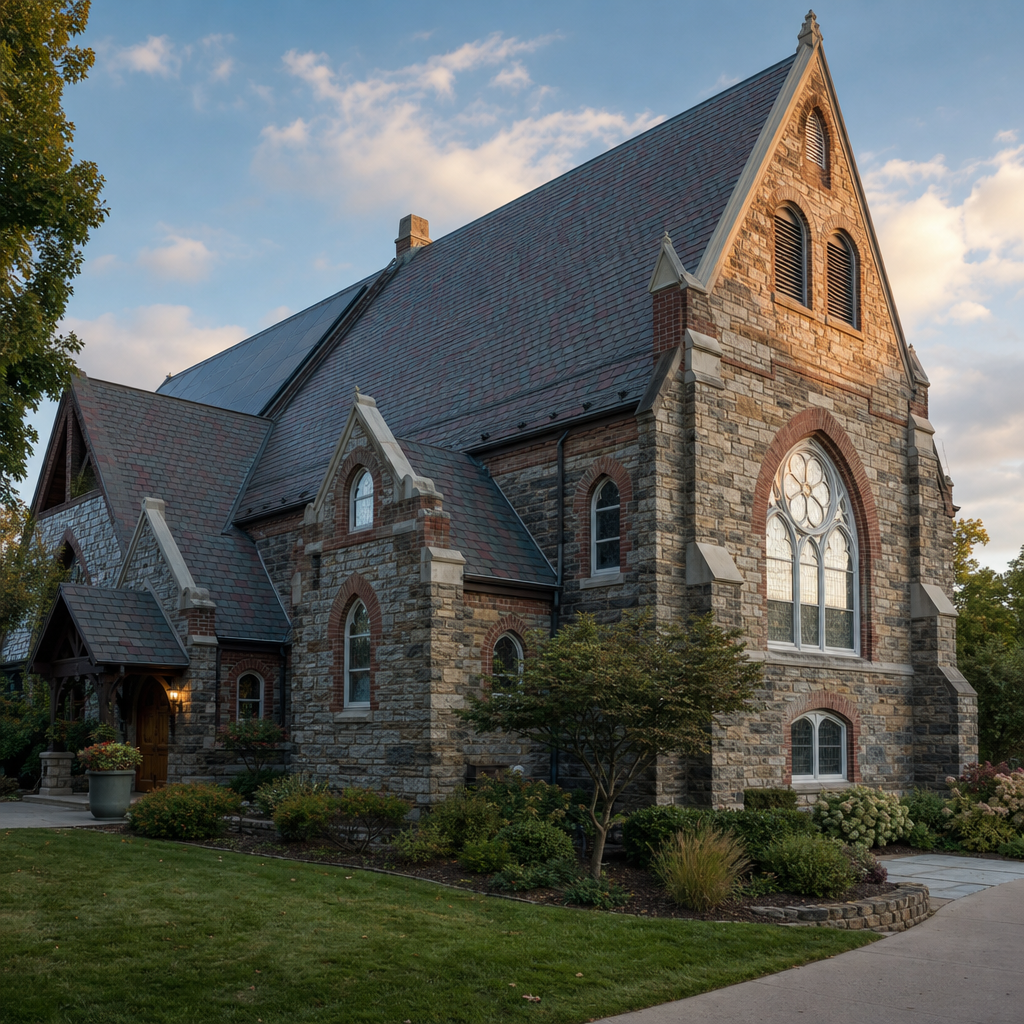
For many faith communities the roof isn’t just infrastructure — it’s a responsibility handed down. A well-maintained slate roof is one of the longest-lasting roofs there is (industry sources cite 75 to 100 years or more), which is exactly why removing sound slate to “make room” for solar rarely serves good stewardship. The SlatePlate was engineered to honor the roof: its patented spacer directs the load to the structure beneath rather than the slate, helps keep tiles from fracturing, and seals at each mount (company-stated). The building’s character stays intact while it quietly begins to generate power.
Operating-cost relief that frees money for ministry
Every dollar a congregation sends to the utility is a dollar not spent on the community it serves. Solar can turn an ongoing operating expense into predictable, self-produced energy — and over the long life of a slate roof and an array, that relief can free resources for ministry, outreach, facilities, and the people you serve. We won’t put a savings figure on your building sight-unseen; what an array can produce, and what it can offset, depends on your roof, your usage, and your site — which is precisely what a consultation evaluates.
A nonprofit path to the federal solar credit: elective (“direct”) pay
Historically, federal solar tax credits did little for a house of worship, because a nonprofit has no tax liability to offset. Under federal elective pay (also called “direct pay”), tax-exempt entities — houses of worship included — may be able to receive certain clean-energy credits as a direct payment from the IRS even without tax liability. It generally requires IRS pre-filing registration before the credit is claimed, and the federal timelines have been moving. We won’t state amounts or deadlines as settled, and no website should: confirm current rules, eligibility, registration steps, and deadlines with a qualified tax professional before relying on any figure or timeline.
Preservation, respected — not an afterthought
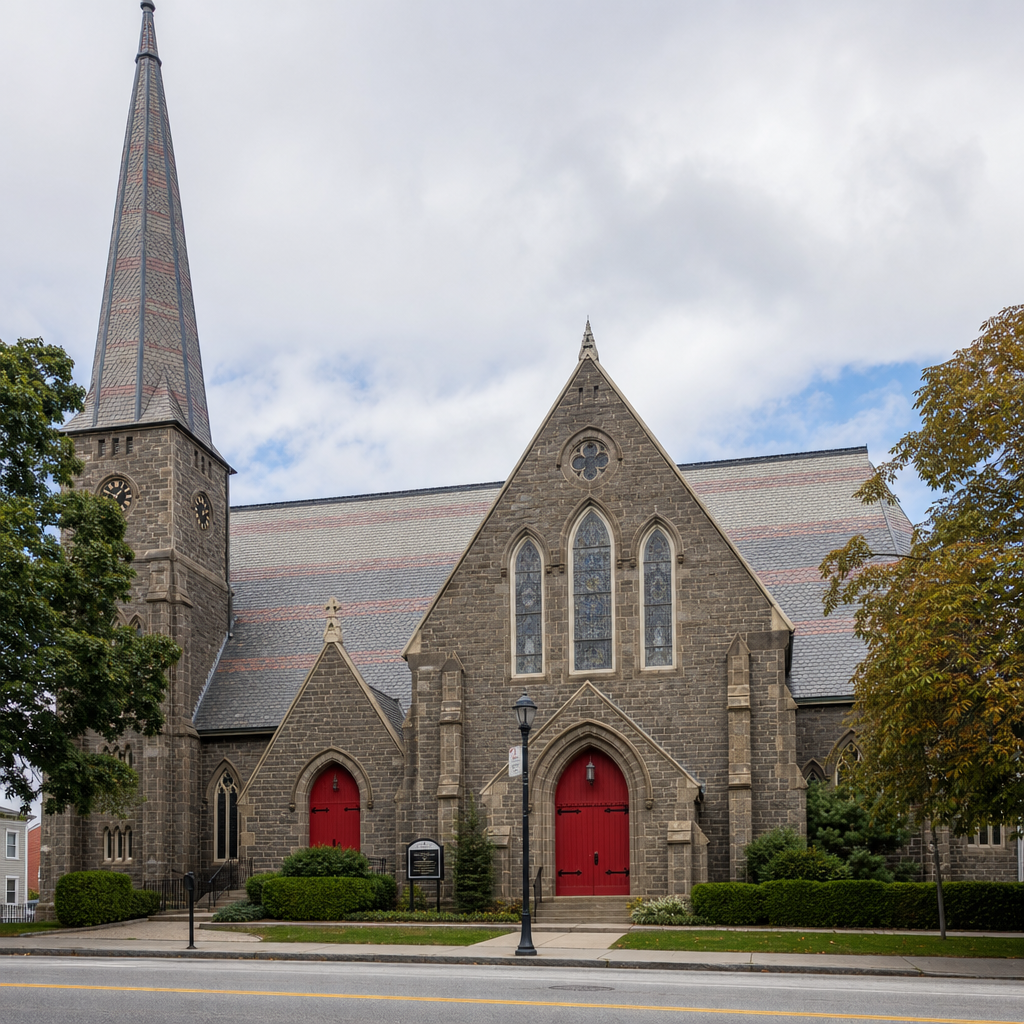
Many worship buildings are historic, and that calls for a careful path rather than a cautious “no.” National Park Service guidance indicates that solar which is not visible, or only minimally visible, from the public right-of-way generally meets the Secretary of the Interior’s Standards; installations should be reversible, should not damage historic roofing material (slate is named), and should not alter character-defining roof slopes — with secondary or screened slopes recommended. The SlatePlate’s no-removal, structure-mounted approach suits that intent, and the array and mounts can be removed and the slope returned to slate. We never claim a commission has approved a specific project; where your building is landmarked or in a historic district, historic review is part of the process, and we’ll help you document the work. (Many of these buildings overlap with our historic-preservation work — and with universities and colleges with historic campus buildings.)
Why now
Three things are converging. Energy costs keep climbing, so the operating-cost case strengthens each year. Elective pay opened a federal incentive route that simply didn’t function for tax-exempt organizations before — but its rules and deadlines are moving, so the window deserves attention now rather than later (confirm specifics with a tax professional). And a sound slate roof you preserve today can carry an array for decades, while tearing it off to chase solar would forfeit both the roof and the savings. The honest takeaway: it’s worth finding out where your building stands.
On the roof
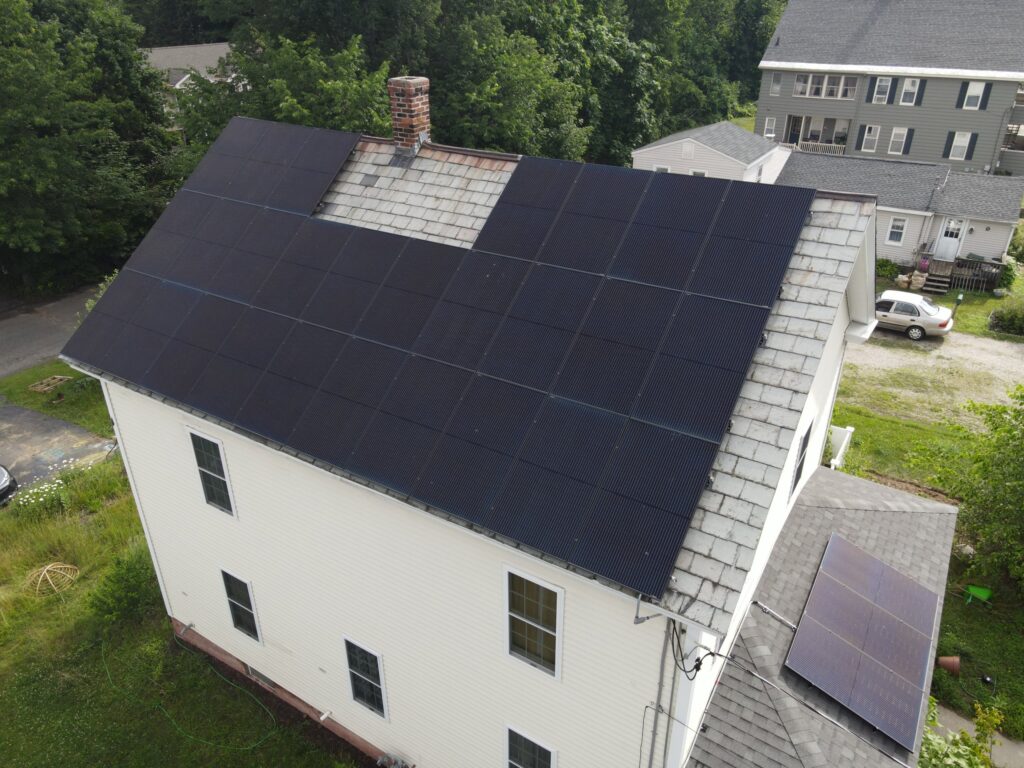
See it on a slate roof
Power added where it’s least seen, the façade unchanged, and the roof itself cared for in the process.
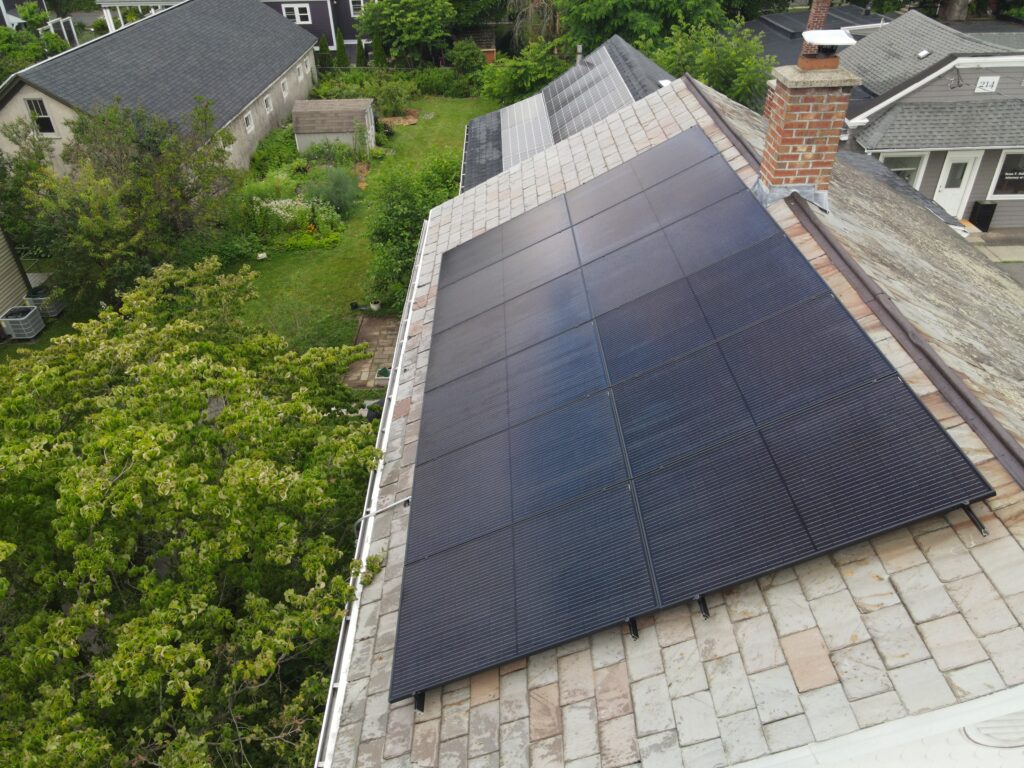
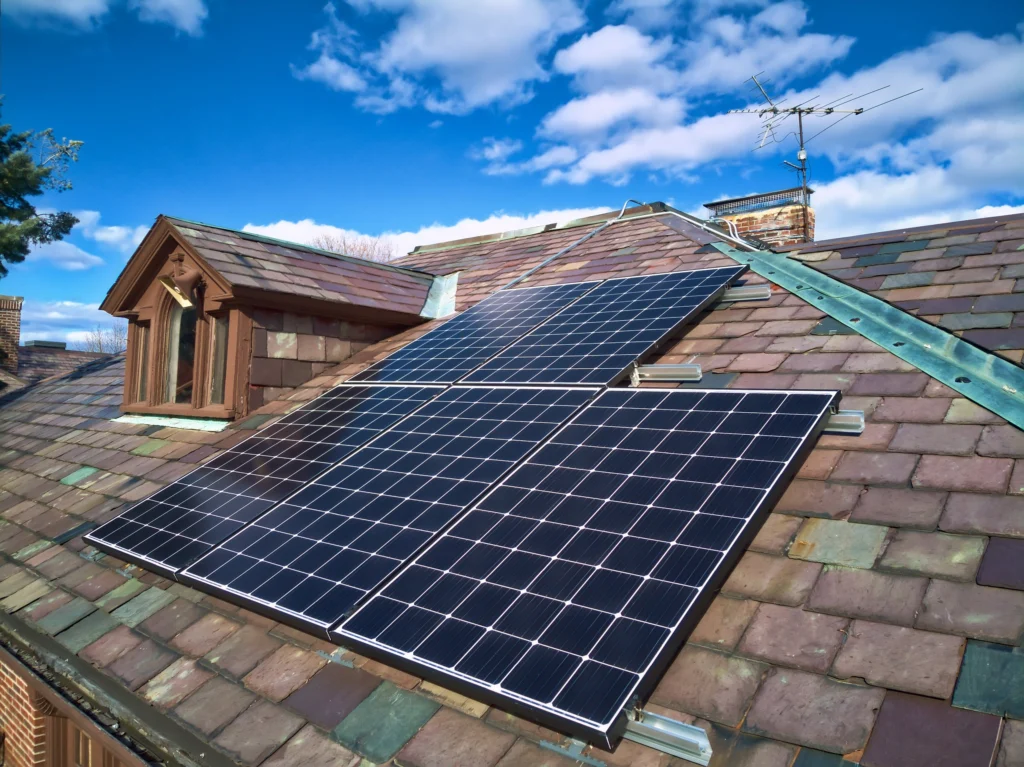
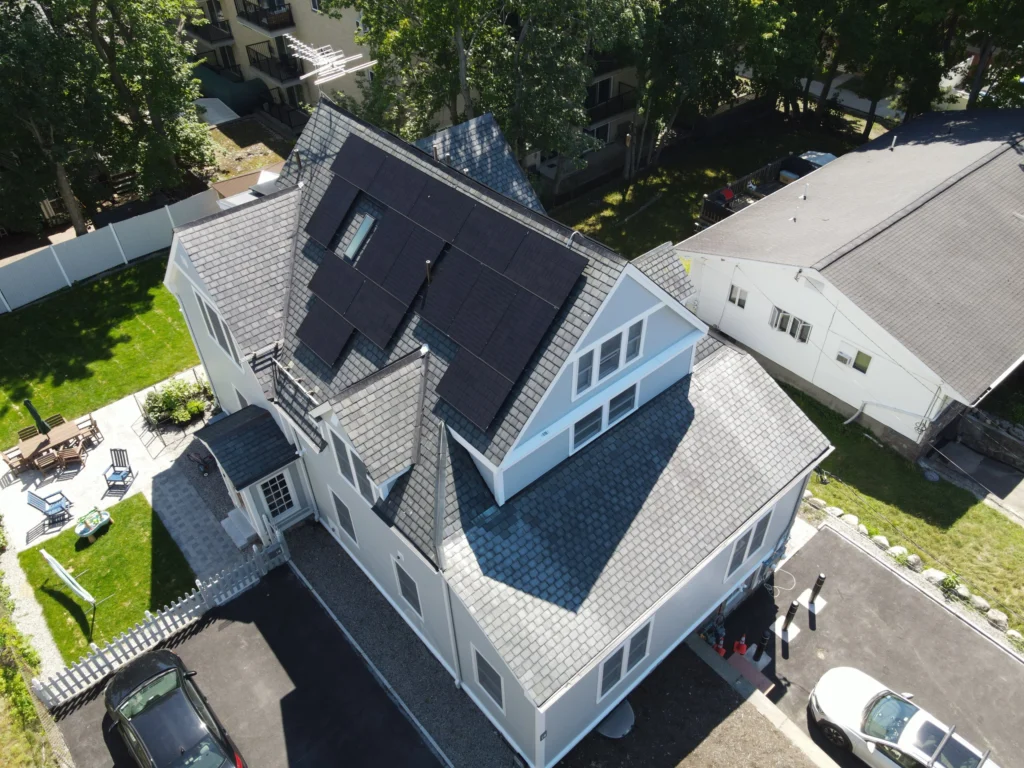
See it on real roofs
Installation videos
Real installs and product walkthroughs — play inline, no pop-ups.
Why congregations can study this responsibly
A method built to protect the building.
2017
installer-built, in the field since
U.S. & E.U.
patented mounting system
0
slate removed to mount
Engineer-founded · made in the USA (Massachusetts) · patented in the U.S. & Europe · trains installers in person, over Zoom, and on demand · supplies installers directly and through distributors.
From consultation to activation
How the project works for your congregation
A clear path from your committee’s point of view — with the decision, the timeline, and the federal filing kept firmly in your hands.
1
Your committee requests a consultation
Someone on your facilities or property committee submits the form — organization, building age and roof type, decision timeline, contact. You reach out; a Solar Slate Solutions advisor follows up. No cost, no obligation, no pressure.
2
Building, roof, and site review
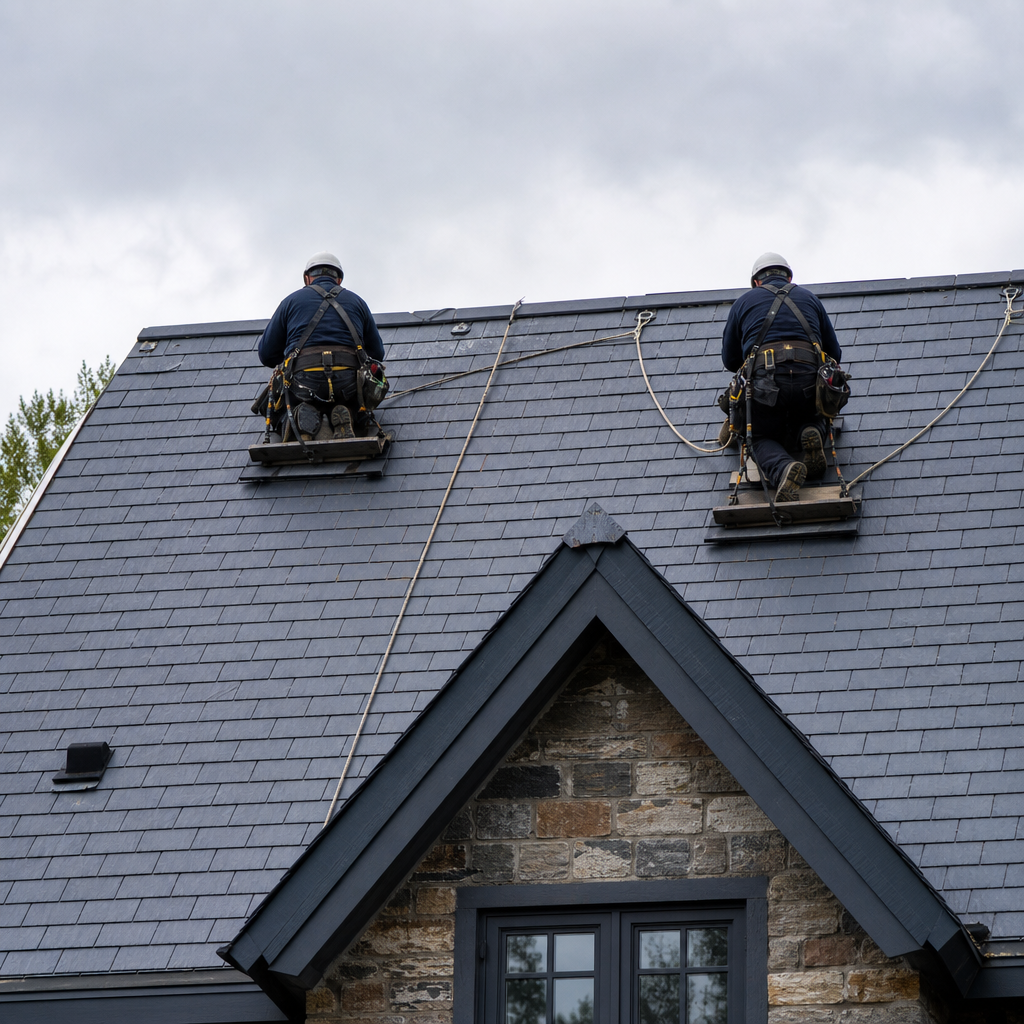
A specialist evaluates slate condition, roof structure, orientation, and shading to judge feasibility, and discusses where an array could sit with the least visual impact. If slate repairs are needed, a slate roofer is brought in. Not every building is a fit, and we’ll tell you plainly if yours isn’t.
3
Board-ready proposal and documentation
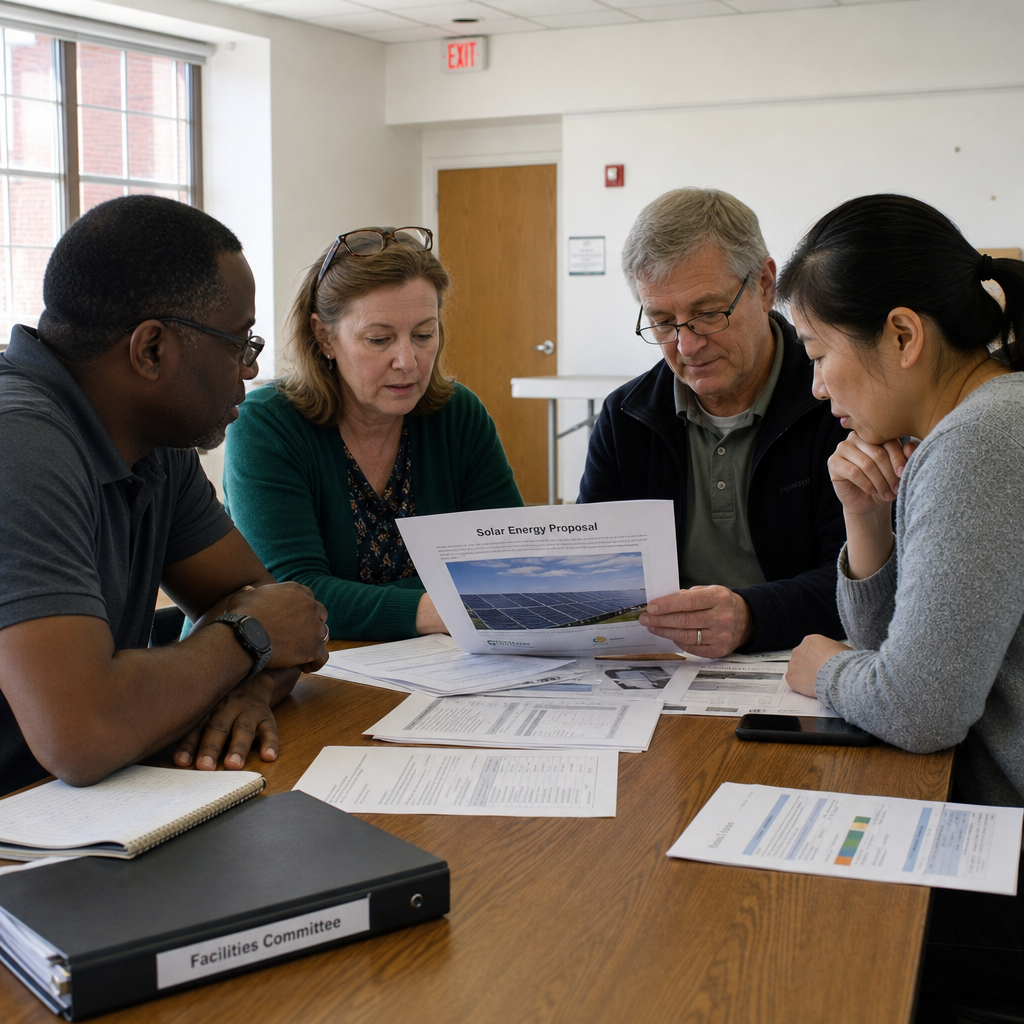
You receive a layout designed for production and discretion, plain-language materials your board, donors, and congregation can understand, and an outline of the elective/direct pay path to discuss with your tax professional. The Solar Slate Solutions team prepares the package; your committee reviews. You can request board-ready materials any time — even before you’re ready to decide.
4
Board / committee approval
Your board, vestry, council, or congregation reviews and votes by your own governance process and timeline. This step is entirely yours; we provide whatever documentation and answers help your deliberation, and we’re glad to speak with your committee directly.
5
Historic review, if applicable
For landmarked buildings or those in a historic district, the appropriate historic review is completed. You (often with us supporting documentation) engage the reviewing body; we never claim an approval on your behalf. (See our historic-preservation approach.)
6
Slate preparation
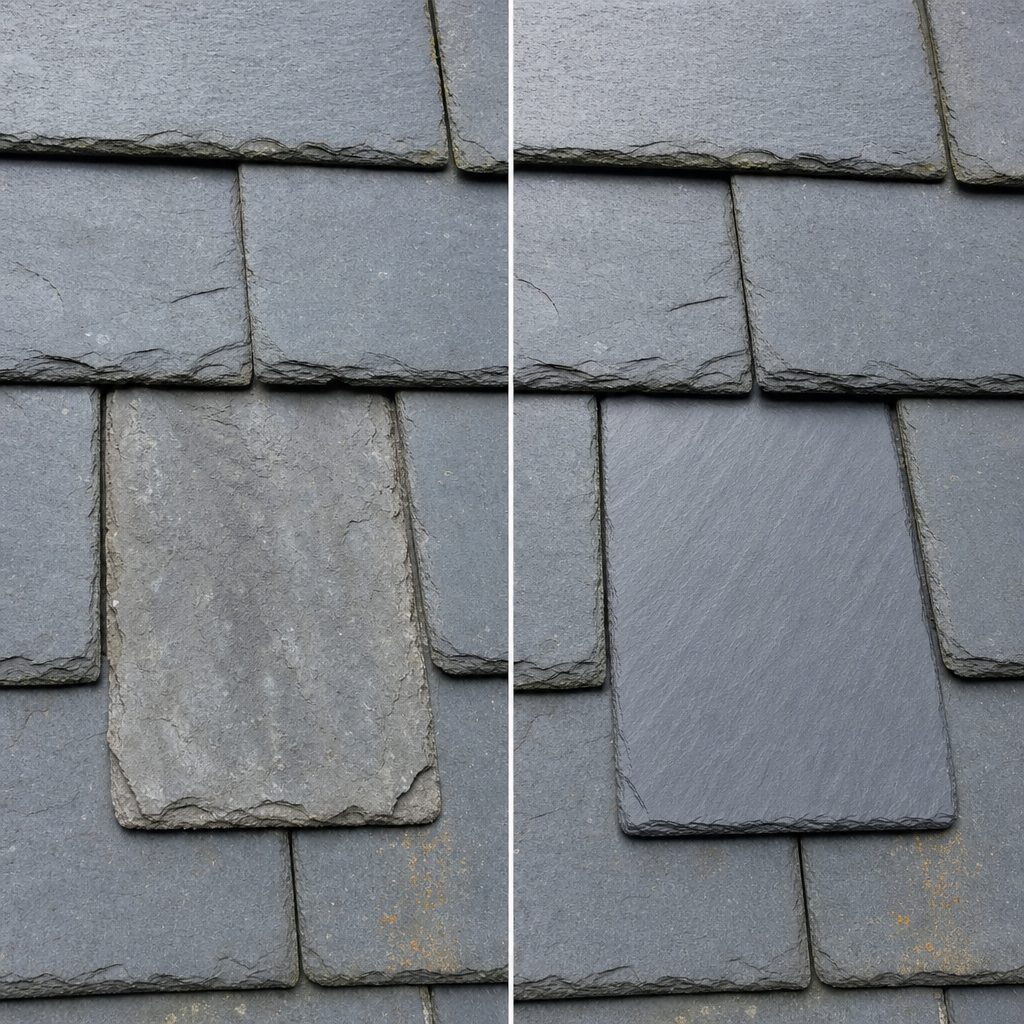
Compromised slates within the array footprint are replaced, and related slate work — broken slates, ridge and valley, chimney flashing, even skylights — can be addressed in the same project. A slate-skilled crew or slate roofer does this work; it’s where the roof itself gets healthier (company-stated).
7
Installation with the SlatePlate
Mounts are set without removing your slate; panels and electrical go in. A Solar Slate Solutions crew (in New England) or a SlatePlate-trained installer (elsewhere) performs the work. Most installs are reported to be quick and minimally disruptive to services and activities (company-stated).
8
Inspection, permitting, activation — and elective-pay filing
Local inspection and utility steps are completed, the system is switched on, and your organization (with your tax professional) handles any IRS pre-filing registration and the elective-pay claim. Your installer manages permits and the AHJ; your tax advisor manages the federal filing. Confirm current rules with a tax professional.
9
You generate — and we’re still here
Your community monitors production and savings; warranty coverage and support continue over the life of the system. You put the savings to work; the team supports the system for the long term.
Your concerns, answered
What a congregation asks before it decides
The honest questions stewards raise — answered straight.
“Is solar good stewardship of a building we’re responsible for?”
That’s the right frame, and it’s why the method matters as much as the panels. The SlatePlate was built so the roof is cared for, not compromised: load is designed to go to the structure rather than the slate, compromised slates in the array area are replaced before panels go on, and the panels then shield that section from hail, snow, wind, and UV (company-stated). Stewardship of the building and stewardship of the budget can point the same direction.
“Our budget is tight and every dollar is accountable.”
Understood — and that’s exactly why the incentive picture matters. Through federal elective/direct pay, a tax-exempt organization may now be able to receive certain clean-energy credits as a payment from the IRS even without tax liability, which can materially change the math. The numbers must be confirmed with your tax professional, and we’ll give your board clear materials to weigh the decision responsibly rather than ask for a leap of faith.
“How do we bring this to our board, vestry, or council?”
We prepare board-ready materials in plain language — what the system is, where it would sit, how the roof is protected, the project flow, and the elective-pay path to review with your advisor — so your committee can deliberate with real information. We’re also glad to join a committee meeting to answer questions directly. The decision, and the timeline, stay entirely yours.
“Will donors see this as a wise use of resources?”
Many donors respond well to a project that protects a beloved building, reduces long-run operating costs, and demonstrates visible care for creation and community. The board-ready packet is written to be shared with donors and gives them the same clear picture your committee gets — including the honest caveats. We don’t overstate; credible materials tend to build more confidence than glossy ones.
“Will panels change the look of a building people love?”
Placement is planned for both performance and respect for the building. Arrays are low-profile, and we favor less-visible side or rear slopes so the façade, steeple, or dome people cherish stays unchanged. For historic buildings, that approach also aligns with guidance favoring minimally visible, reversible installations (NPS). You’ll see the proposed layout before anything is installed.
“Our building is old and historic — won’t solar damage it or violate preservation rules?”
Historic status calls for care, not avoidance. NPS guidance generally supports solar that is not visible or minimally visible from the public right-of-way, that is reversible, and that does not damage historic roofing material (slate named) or alter character-defining slopes. The SlatePlate’s no-removal, structure-mounted method fits that intent, and the array and mounts can be removed and the slope returned to slate; where review is required we help document the work — but we never claim a commission has approved a specific project.
“Who is responsible for the roof over the long term?”
You’ll have clear lines of coverage: manufacturer limited warranties on system components including the SlatePlate, plus standard workmanship and roof warranties through your installation (company-stated). Confirm the exact terms in writing before you sign, and keep them on file for your facilities records.
“Will it leak? This roof can’t fail.”
Weathertightness is engineered at each mount — the company describes layered protection using its flashing, an approved sealant, and the mounting brackets, and reports a strong track record (company-stated). We’d rather under-promise than over-promise: ask for the specifics of the flashing system and the warranty in your proposal, and have your facilities committee review them.
“We can’t shut down for a long, disruptive project.”
Most installs are reported to be quick and minimally disruptive (company-stated), and because the slate isn’t torn off, the work is far less invasive than a re-roof. Your installer will coordinate timing around services, holy days, and community activities, and the AHJ and permitting steps are managed for you.
“Do you have experience with houses of worship specifically?”
We’ll be straightforward: Solar Slate Solutions manufactures the SlatePlate, trains installers, and performs its own installs in New England, with testimonials from slate-roof property owners — and we are not going to dress up a worship project we haven’t done. What we offer your community is the right method for a historic slate building, a clear process, and materials built for boards and committees. The consultation is where we learn your building and tell you honestly whether it’s a fit.
Ready to find out where your building stands? Let’s look at your roof and give your board something it can actually use.
Common questions
Houses of Worship FAQ
Can solar really go on our slate roof without removing the slate?
Yes. SlatePlate leaves the slate in place and keeps the weight off it — it attaches to the frame underneath instead. Whether your roof works depends on its condition, its shape, which way it faces, how much shade it gets, and (if your building is historic) a historic review.
We don’t pay taxes as a nonprofit — can we still get the federal solar credit?
This is the big change. A federal program called elective pay (also called “direct pay”) lets tax-exempt groups — including houses of worship — get certain clean-energy credits as a direct payment from the IRS, even though you owe no taxes. You usually have to register with the IRS before you claim it, and the deadlines keep shifting. Check the current rules with a tax professional before counting on anything.
How does the elective-pay process actually work for us?
In simple terms: finish the solar project, register with the IRS before you file, then claim the credit as a payment on the right tax form. The exact steps and deadlines are set by current IRS rules and have been changing — your tax professional should confirm what applies to your group and year.
How do we get our board or congregation to approve it?
Ask for board-ready materials. You’ll get a plain-language packet — what the system is, where it would go, how the roof stays protected, the steps, the warranties, and the elective-pay path to review with your advisor. It’s made to share with your board, donors, and congregation, and someone can join a meeting to answer questions.
Our building is historic. Is solar even allowed?
Often yes, with care. National Park Service guidance generally supports solar that you can’t see (or barely see) from the street, that can be removed later, and that doesn’t harm the historic slate or change key roof lines. If your building is a landmark or in a historic district, it goes through a historic review — we help with the paperwork but never claim it’s approved for you.
Where would the panels go so the building still looks right?
Wherever they work best while staying out of sight — usually a side or back slope, so the front, steeple, or dome people love stays the same. You’ll see and approve the layout before anything goes up.
How much will it cost, and how much will we save?
Both depend on your building, roof, energy use, and location, so we won’t guess a number without seeing it. The consultation gives you a layout and a cost picture, and your tax professional confirms how elective pay changes the final number. Solar on slate does cost a bit more than on a normal roof because it needs special equipment and skilled workers.
Is the roof safe during and after the install?
The method is built to protect the slate: the weight goes to the frame, cracked tiles in the panel area get replaced first, and each bolt is sealed with layers of flashing (metal seal), sealant, and brackets. As with any roof work, careful crews and a good inspection matter — ask for the sealing and warranty details in your quote.
Who actually does the work?
In New England, Solar Slate Solutions installs it directly. Elsewhere, a SlatePlate-trained solar installer does the install, and a slate roofer may handle slate repairs. We can help you find trained pros.
What warranties protect the building afterward?
The SolarSlate warranty covers the parts (including SlatePlate), plus your installer’s warranty on their work and roof. Get the exact terms in writing and keep them in your building’s records.
What’s the very first step?
A free, no-pressure “stewardship consultation.” If your building isn’t a fit, you’ll get an honest answer — and if it is, you’ll get materials your board can actually use. Get started.
Care for the building. Steward the budget. Do both.
A patented, USA-made method — preservation-aware, and built to keep the slate.
It starts with a no-cost, no-obligation stewardship consultation — an honest look at your roof and building, where an array could sit with the least visual impact, and how the federal elective/direct pay path could work for your organization (to confirm with your tax professional). Not ready to meet? You can also request board-ready materials for your committee — the plain-language packet your board, donors, and congregation can review. Keep the roof your community treasures; free resources for the work that matters.